The Death of the CSM. The Birth of the Outcome Manager.
The traditional Customer Success Manager is not simply evolving. It is being repriced.
For years, SaaS companies built post-sale organizations around a model that made sense for its time. The Customer Success Manager was there to drive adoption, coordinate stakeholders, maintain executive relationships, run QBRs, monitor renewals, and generally ensure that the customer felt supported. In many organizations, that model became central to how value was delivered after the sale. A good CSM was responsive, polished, organized, and relationship-oriented. They kept the account warm. They kept communication flowing. They kept risk visible. In an era where software itself was harder to configure, harder to understand, and harder to operationalize, that role had clear value.
But the economics of that model are starting to change.
AI is beginning to absorb a meaningful portion of the work that once made the CSM indispensable. Follow-up emails, recap notes, meeting summaries, QBR preparation, stakeholder reminders, risk flags, success plans, and routine coordination are all becoming easier to automate or accelerate. The visible busyness of customer success, once mistaken for strategic value, is becoming cheaper. And when a category of work becomes cheaper, the market begins to ask a harsher question: what part of this role is truly valuable?
That question matters even more in manufacturing and industrial SaaS, where the customer’s world has always been grounded in measurable performance. A plant manager does not buy CMMS software to improve vendor responsiveness. A maintenance leader does not invest in a platform to increase login activity. An operations executive does not care how often the vendor checks in unless those check-ins lead to a measurable change in performance. Customers buy these systems to reduce unplanned downtime, improve PM compliance, increase schedule compliance, raise MTBF, lower MTTR, improve OEE, reduce parts stockouts, strengthen asset data quality, and run more reliable operations. In that context, software adoption is not the goal. It is merely one mechanism through which the goal might be achieved.
That is where the old model begins to crack.
Too much of traditional customer success has been built around proxies for value rather than value itself. Touchpoints are not outcomes. Software adoption is not the same as value realization. A healthy meeting cadence is not the same as operational improvement. A well-liked vendor team is not the same as a system that is moving the customer’s business in a measurable way. For a long time, these proxies were tolerated because they were hard to separate from actual progress. But that ambiguity is starting to disappear. Customers are becoming more data-driven. Executive scrutiny is increasing. Finance teams are asking harder renewal questions. Procurement organizations are becoming less sentimental. In that world, customer success theater begins to lose its pricing power.
That does not mean relationships no longer matter. It means they matter differently.
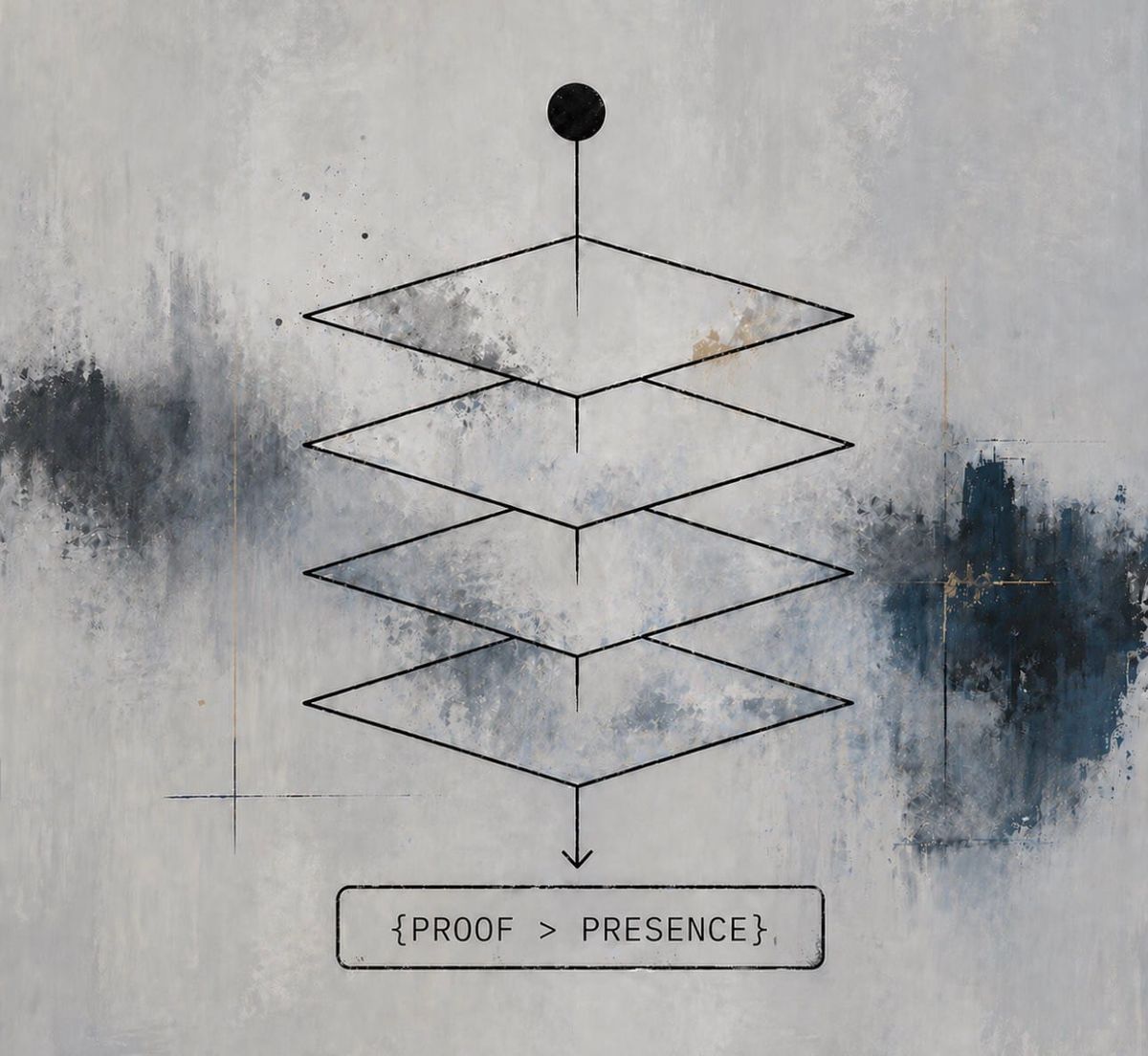
The old model often assumed that relationship came first and results followed. Build trust, stay close, maintain executive access, keep the account engaged, and value will eventually become visible. In many SaaS environments, that logic worked well enough. But in the next era, especially in industrial software, the sequence is reversing. Results come first. Relationship deepens after. Customers are still open to strong vendor relationships, but they are increasingly unwilling to grant strategic trust in advance of measurable impact. They want evidence before intimacy. They want operational credibility before partnership language. They want proof before polish.
This is the real shift underway: results are no longer the byproduct of the relationship. They are the foundation of it.
That has serious implications for the profile of the future post-sale leader. The smooth talker is not enough. But neither is the pure analyst. A person who can build rapport but cannot connect the platform to performance improvement will increasingly struggle to defend their value. At the same time, someone who can read metrics but cannot build trust, influence stakeholders, or translate operational change into executive language will also fall short. The winning profile is not relationship-builder versus operator. It is a hybrid role grounded in outcomes. The strongest future leaders will look less like account managers and more like operational performance partners. They will understand the customer’s business at the level of execution, not just sentiment. They will know which metrics matter, what changed, why it changed, and how to sustain it. They will use evidence as the basis for trust.
This is why the term Outcome Manager is more than a new label. It represents a new center of gravity for post-sale value.
The Outcome Manager is not measured primarily by account coverage, customer contact, or generalized adoption. The role is accountable for helping the customer achieve measurable improvement. In manufacturing SaaS, that means tying the platform to reliability metrics, maintenance execution, production performance, spare parts readiness, asset data quality, and other indicators that reflect whether the operation is actually getting better. Adoption still matters, but only in context. It matters because it enables outcomes, not because it can stand in for them. The old model optimized for customer contact. The new model must optimize for customer improvement.
For SaaS executives, this is not a semantic change. It is an operating model decision.
As AI continues to automate low-leverage coordination work, companies will be forced to rethink what they are really paying post-sale teams to do. If those teams remain centered on activity metrics, they will increasingly look bloated, expensive, and strategically thin. If they evolve toward measurable customer outcomes, they become harder to commoditize and more valuable to the business. They become central to retention, expansion, differentiation, and executive credibility. In manufacturing software especially, where customers live in a world of throughput, downtime, compliance, and asset performance, the companies that win will not be the ones with the most polished customer success motion. They will be the ones that can most credibly connect their software to operational results.
AI will not eliminate post-sale roles. It will expose which parts of those roles were never strategically valuable to begin with.
That is why the future of customer success will not belong to the person who is merely the most attentive, the most likable, or the most organized. It will belong to the person who can move metrics, prove value, and turn measurable results into durable trust. The role is not disappearing. But its logic is changing. Its value is moving. Its assumptions are being tested.
The Customer Success Manager was built for an era when managing the relationship could still be mistaken for delivering the outcome. That era is ending.
What comes next is the Outcome Manager.